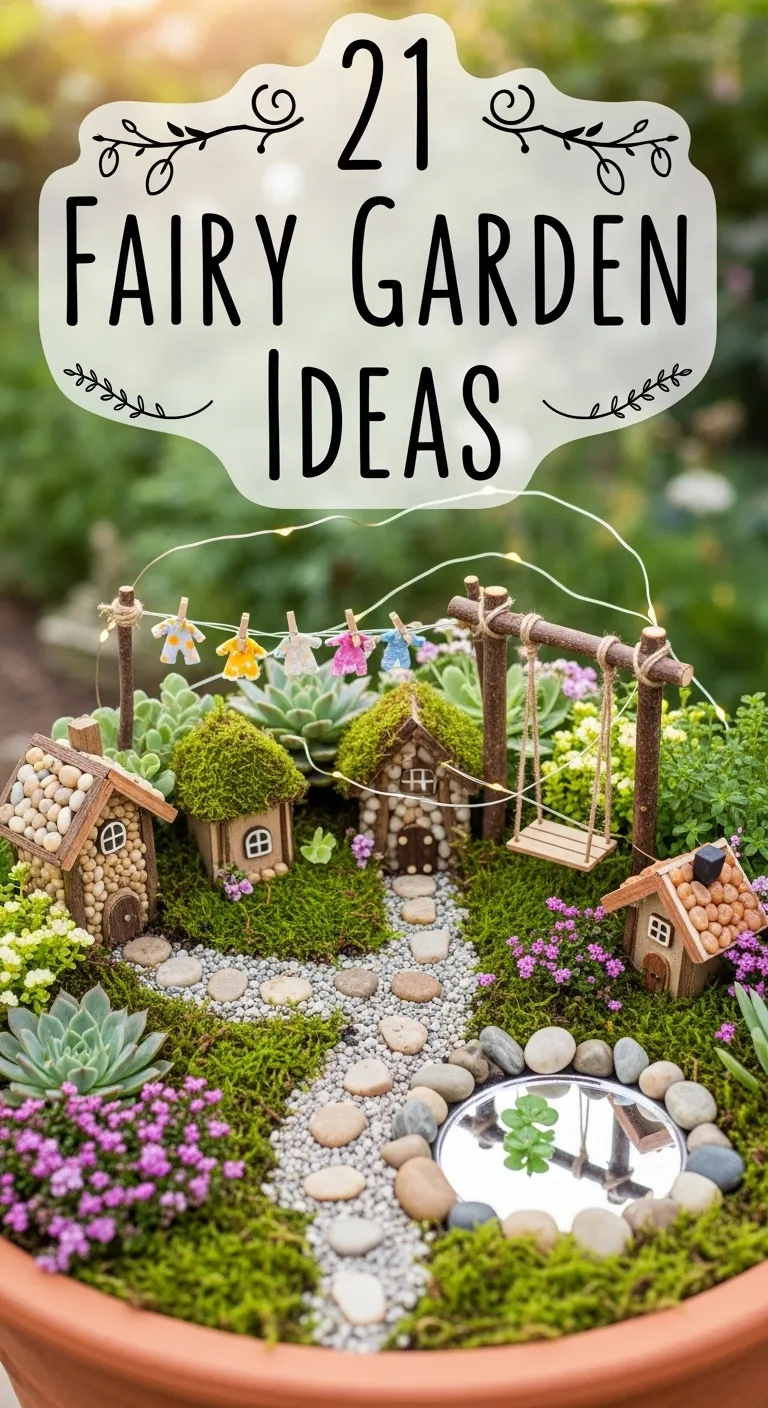
21 Fairy Garden Ideas to Create a Magical Space
Fairy gardens transform ordinary outdoor spaces into enchanting, whimsical retreats. With a combination of miniature houses, tiny pathways, and charming décor, these gardens spark imagination and creativity for both children and adults. From rustic woodland setups to colorful flower-filled scenes, fairy garden ideas offer endless inspiration to create a magical backyard or indoor display. In this guide, we explore 21 fairy garden ideas that blend creativity, charm, and accessibility, helping you craft a captivating miniature world where fantasy meets nature in delightful harmony.
1. Miniature Woodland Fairy Garden
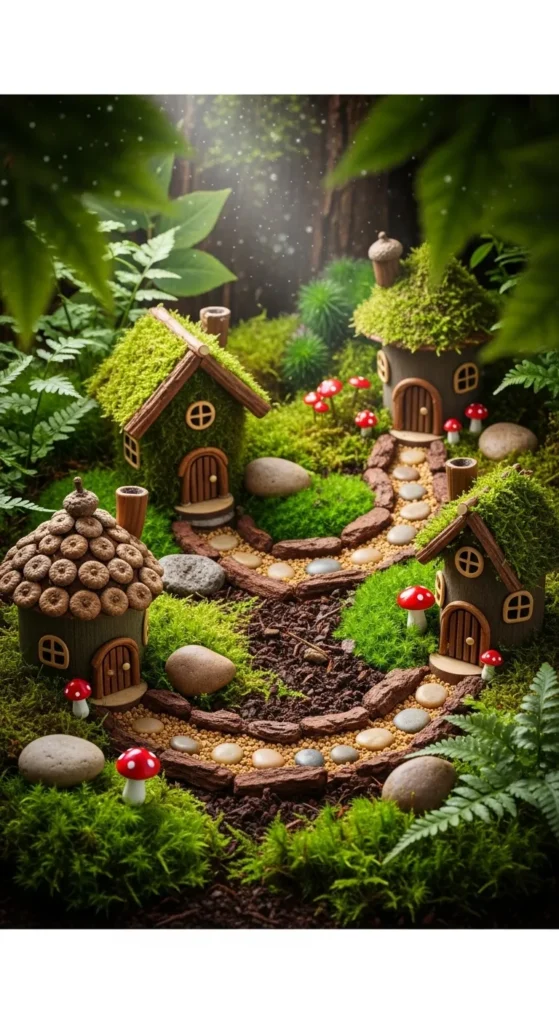
Woodland fairy gardens bring a sense of mystery and enchantment. The moss, small stones, and rustic miniature houses evoke a magical forest feel. Layering plants and moss enhances depth and realism, encouraging exploration and imaginative play.
Functionally, using natural materials ensures the garden blends with its surroundings while staying low maintenance. Woodland setups are ideal for shaded areas and provide a serene, magical focal point in any outdoor space.
2. Flower-Filled Fairy Garden
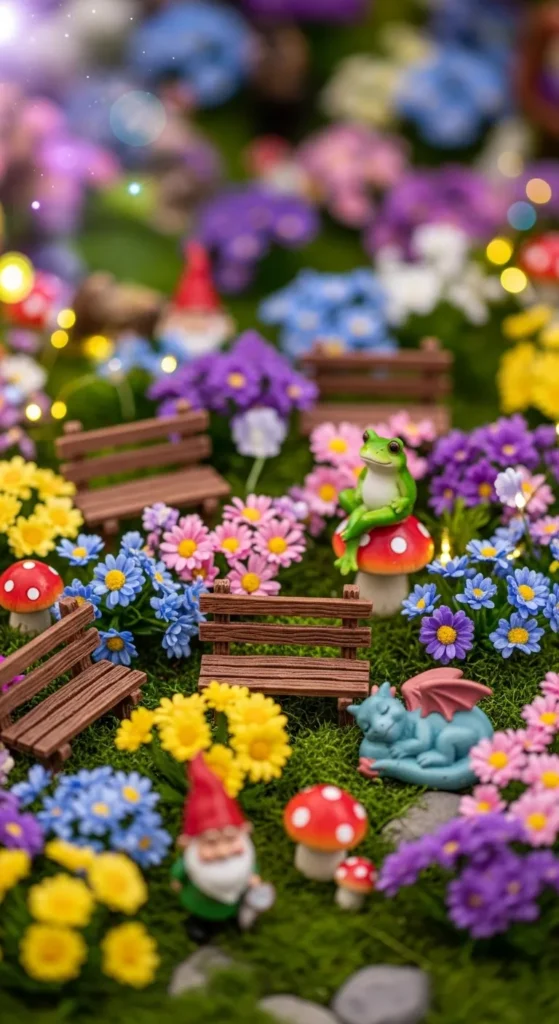
Flower-filled fairy gardens bring brightness and vibrancy to any miniature setup. The mix of colors and textures creates a dynamic scene that attracts attention and inspires creativity. Flowers can be arranged along miniature paths or around fairy houses for added charm.
Functionally, using low-maintenance flowers ensures long-lasting beauty. Seasonal planting allows continuous blooms, providing year-round color and an ever-changing magical display that delights both children and adults.
3. Rustic Log Fairy Garden
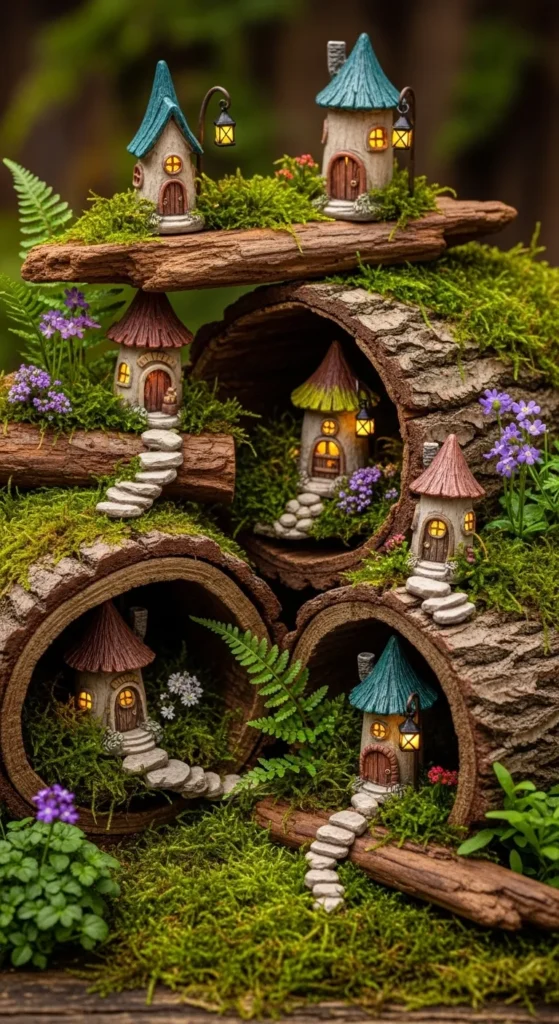
Logs create natural elevation and texture, offering spaces for fairy houses and pathways. Their rustic appearance blends seamlessly with moss, ferns, and miniature trees, evoking a cozy woodland world.
Functionally, logs serve as both decoration and structure, allowing layered arrangements. They can also be repositioned to refresh the garden layout, making the setup adaptable and endlessly creative.
4. Fairy Garden with Miniature Pond
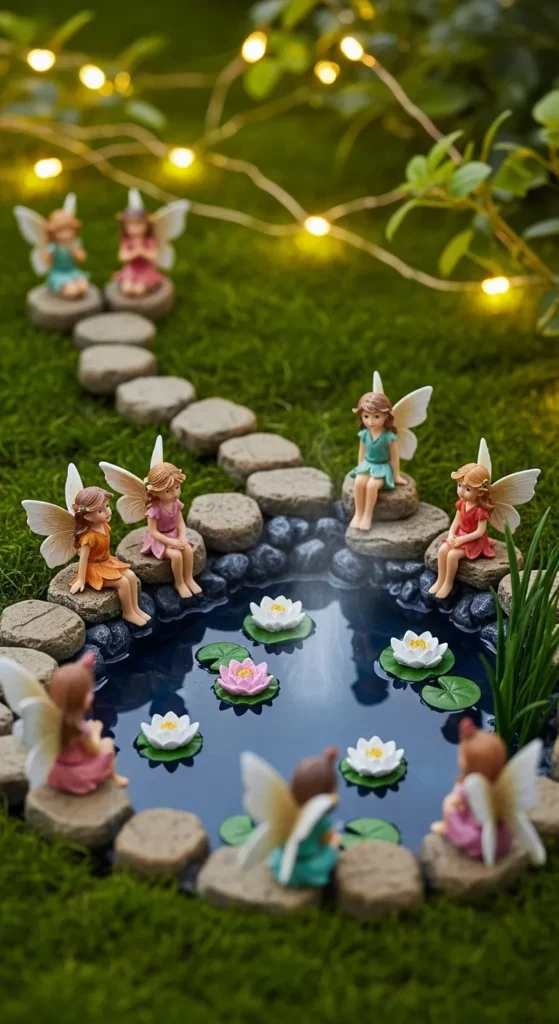
Miniature ponds bring life to fairy gardens, providing a reflective water surface and a sense of depth. Tiny bridges or stepping stones encourage imaginative storytelling, while water-loving plants add color and texture.
Functionally, small ponds can be crafted from shallow dishes or resin liners for easy maintenance. This feature enhances the visual appeal and creates a serene focal point that complements fairy garden landscapes.
5. Moss-Covered Fairy Garden
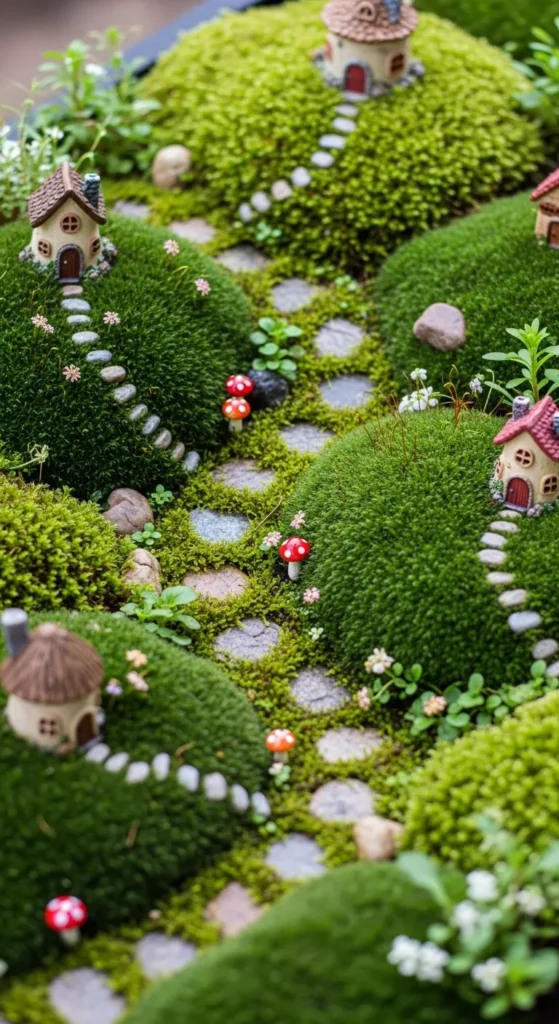
Moss adds softness and greenery, making fairy gardens feel cozy and natural. Its texture contrasts nicely with miniature houses and figurines, creating an immersive miniature world.
Functionally, moss is low-maintenance and thrives in shaded, moist areas. It provides ground cover, stabilizes soil, and enhances the enchanting atmosphere, making it a practical and aesthetically pleasing choice for magical fairy gardens.
6. Enchanted Forest Fairy Garden
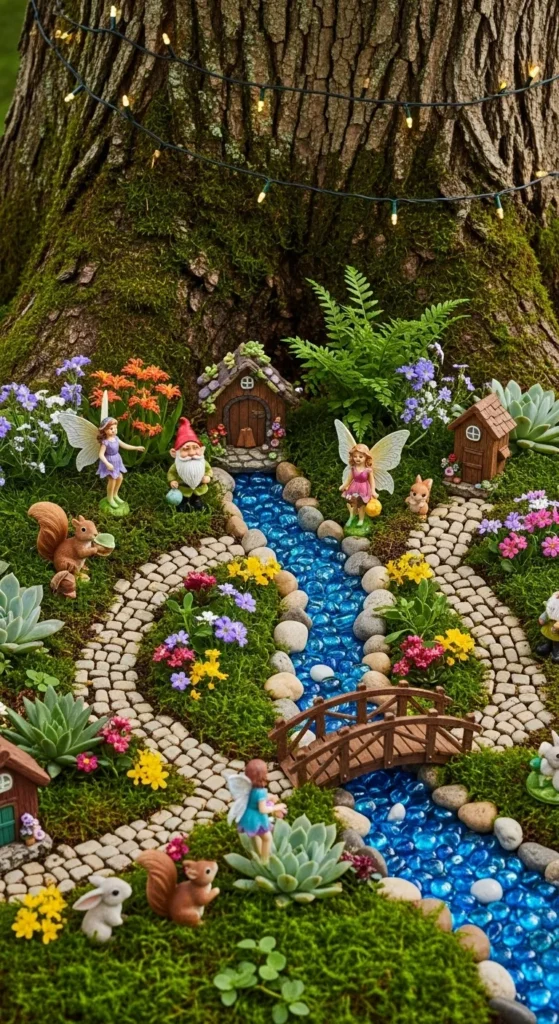
Forest-inspired fairy gardens use miniature trees, shrubs, and natural elements to recreate a mystical woodland. Twinkling lights or small lanterns can add magic, especially for evening viewing.
Functionally, miniature trees and shrubs provide height and dimension. Arranging pathways and houses creatively encourages interactive play and enhances the immersive fairy tale experience.
7. Fairy Garden in a Teacup
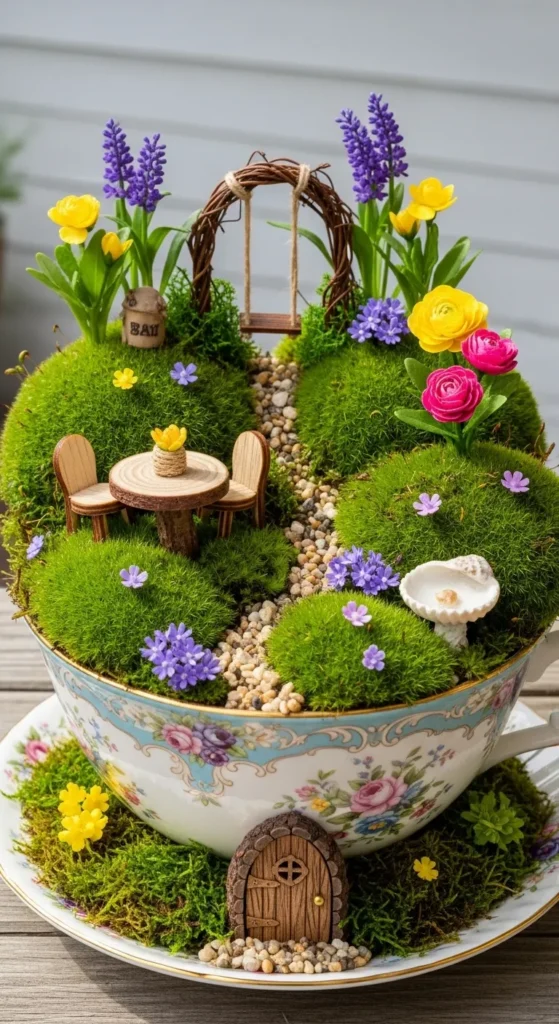
Teacup fairy gardens are charming, portable, and easy to create. They are ideal for small spaces or indoor decoration, combining miniatures and plants in a compact format.
Functionally, the container provides control over soil and water, making maintenance simple. Teacup gardens are perfect for crafting personalized, magical scenes on shelves, tables, or windowsills.
8. Miniature Cottage Fairy Garden
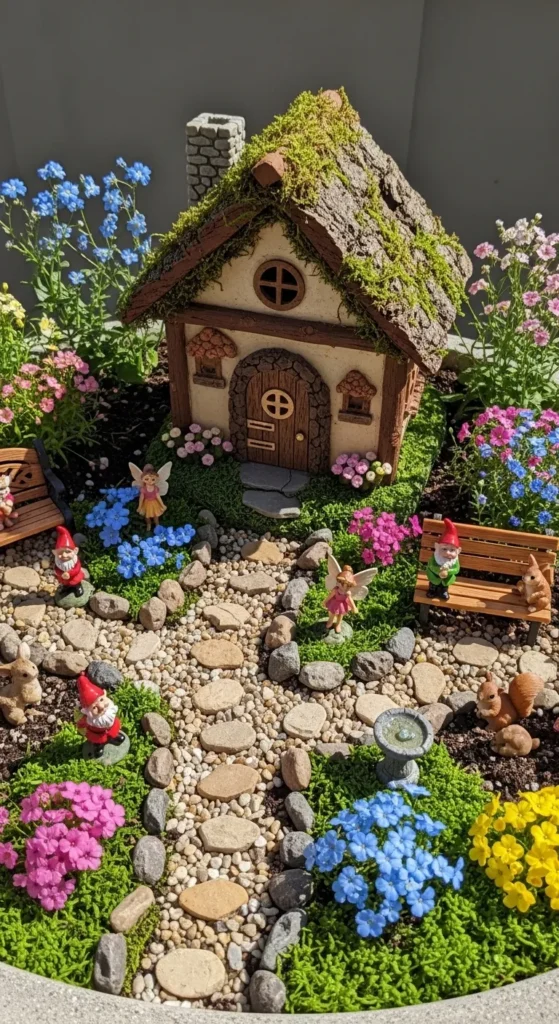
Cottage-themed fairy gardens evoke a quaint and cozy ambiance. The central miniature house encourages narrative play and inspires creativity, while surrounding details enhance realism.
Functionally, miniature cottages provide structure for plants and figurines. They also serve as a decorative anchor, making the garden visually cohesive and magical.
9. Fairy Garden with Lanterns
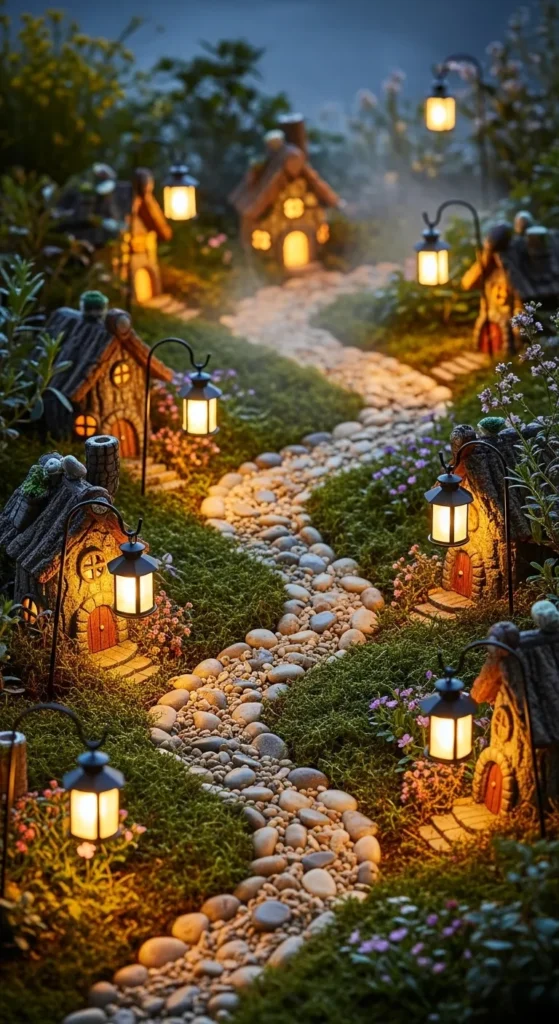
Lanterns enhance the magical feel, especially when lit in the evening. Placement along pathways or near fairy homes highlights key areas, creating a captivating display.
Functionally, LED lights or battery-operated lanterns ensure safety and low maintenance. This addition transforms the garden into a luminous miniature world that’s enchanting day and night.
10. Rock and Pebble Fairy Garden
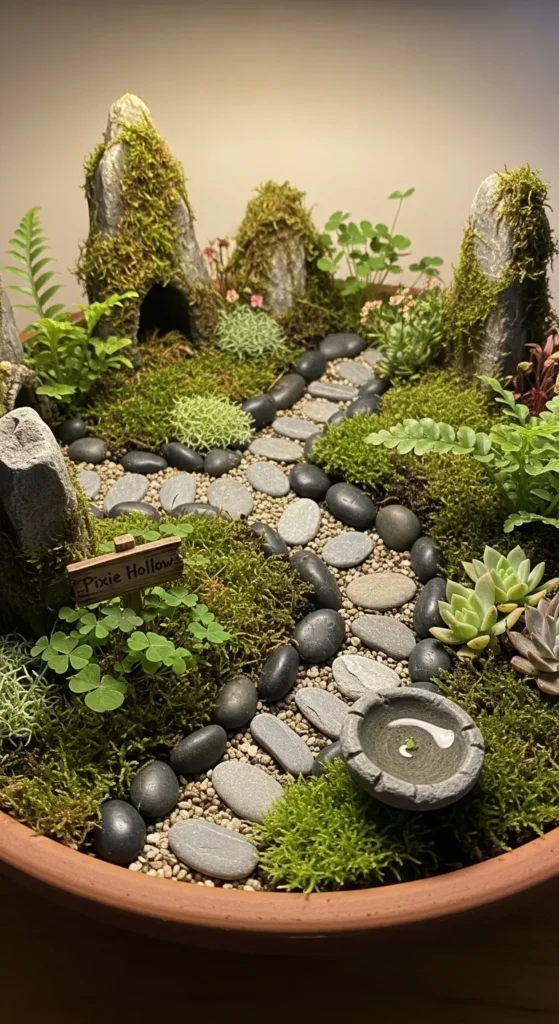
Rocks and pebbles create miniature pathways, bridges, and borders, adding depth and interest. The combination of stones and greenery mimics natural landscapes, enhancing realism.
Functionally, rocks stabilize soil, reduce erosion, and define spaces for plants and figurines. This design balances practicality with charm, offering a durable and visually captivating fairy garden.
11. Window Box Fairy Garden
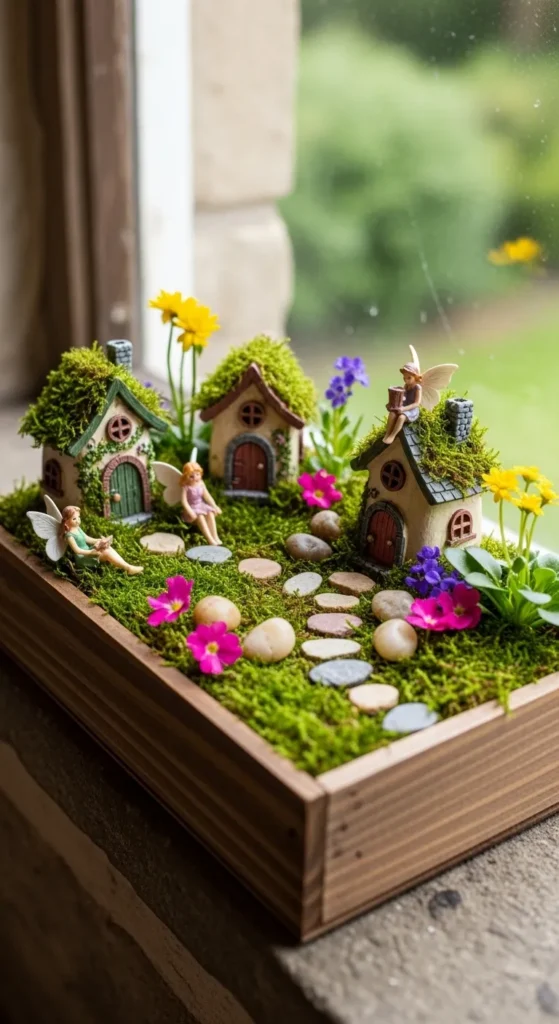
Window box fairy gardens allow for creative displays in limited areas. They’re easy to customize and move, offering seasonal decoration opportunities.
Functionally, the contained soil prevents mess, and small plants are easier to manage. This design is ideal for apartments or small outdoor spaces, offering a portable miniature world.
12. Fairy Garden with Bridge
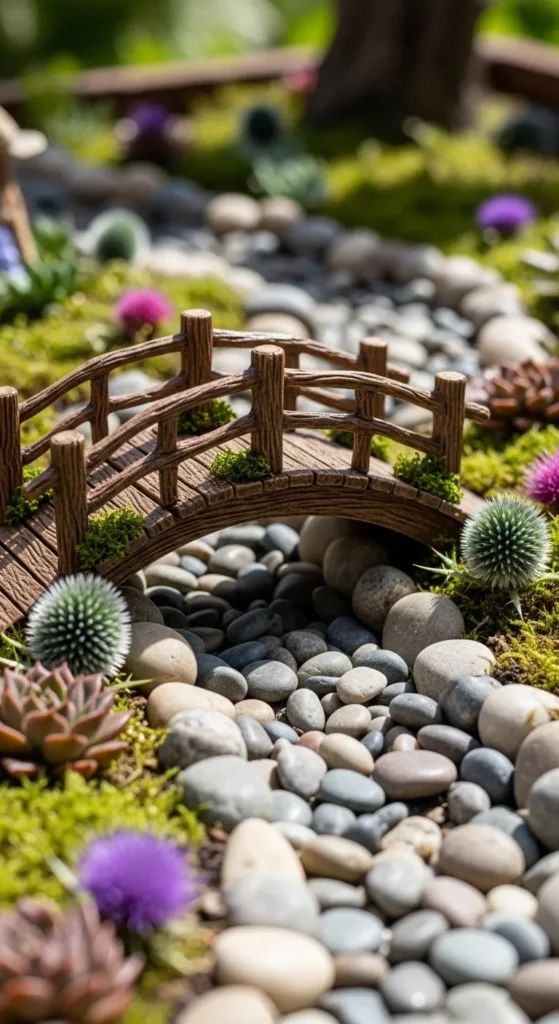
Bridges create focal points and add dimension to fairy gardens. They encourage imaginative play, allowing children to craft stories around crossing paths or tiny adventures.
Functionally, bridges provide visual separation of different areas and add height. Combined with pathways and figurines, this element enhances interactivity and the overall magical experience.
13. Fairy Garden in a Planter Box
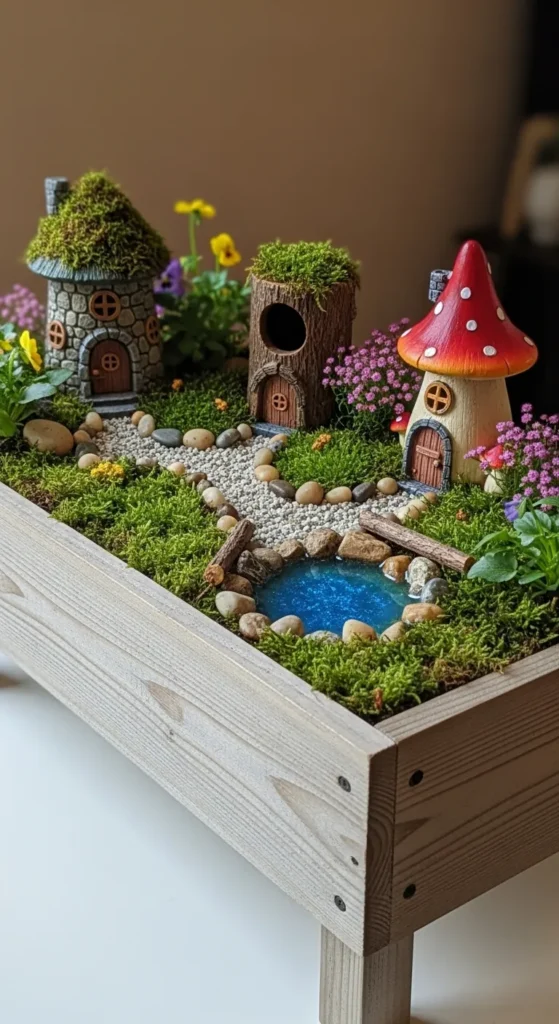
Planter box gardens offer versatility and portability. Elevation makes it easier to view and maintain miniature details while keeping the setup contained.
Functionally, planter boxes allow controlled soil, irrigation, and plant selection. They are ideal for patios or balconies, combining accessibility with enchanting design.
14. Enchanted Castle Fairy Garden
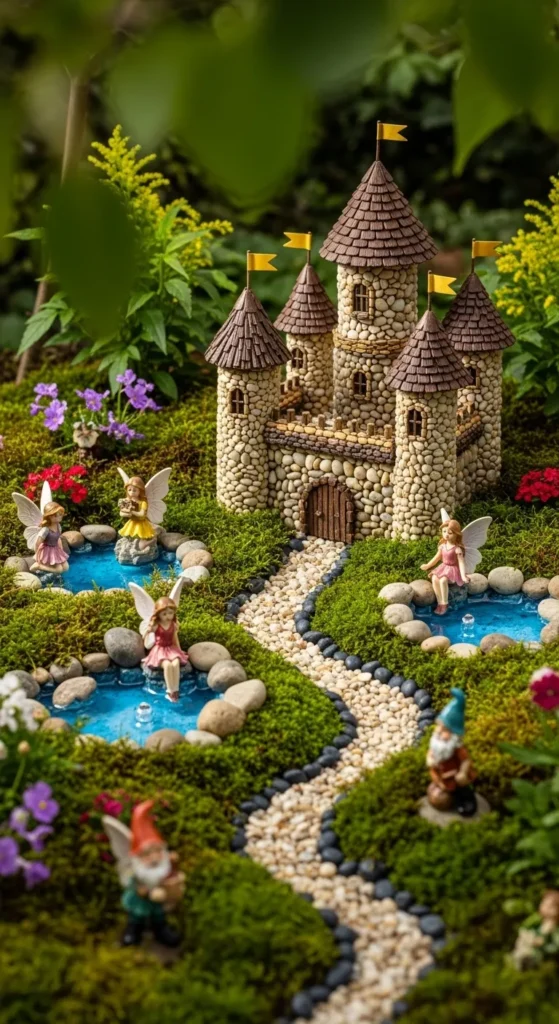
Castle-themed gardens spark storytelling and fantasy. The central structure draws attention and provides context for surrounding elements like bridges, pathways, and figurines.
Functionally, castles act as anchors for design layout. Combined with small plants and moss, this project creates an immersive, interactive miniature world that captivates children and adults alike.
15. Fairy Garden with Mushroom Houses
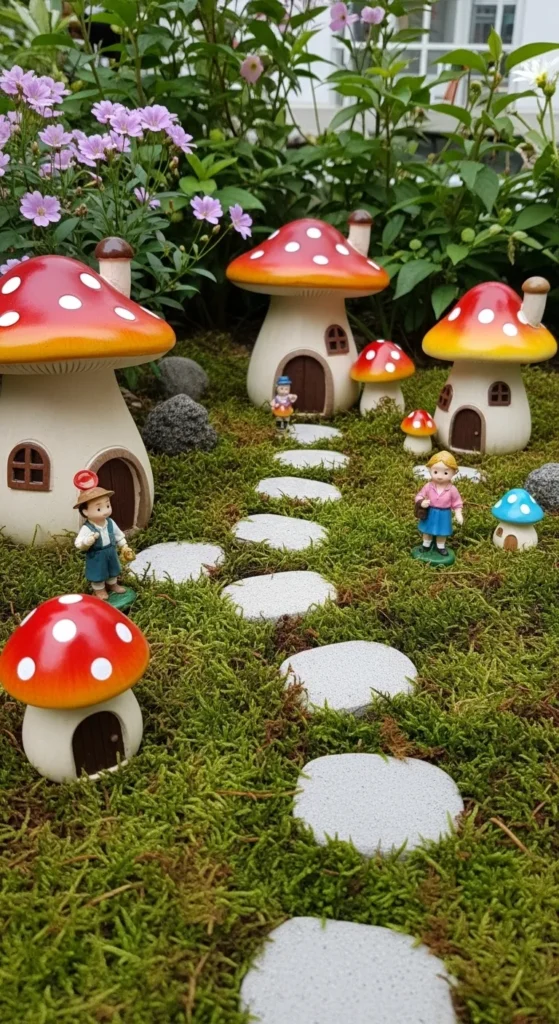
Mushroom houses provide a playful and imaginative element. Their bright colors and rounded shapes contrast with natural greens, creating visual interest and a whimsical atmosphere.
Functionally, they serve as anchor points for fairy arrangements and pathways. Combining mushrooms with plants and figurines ensures an enchanting, interactive environment suitable for imaginative storytelling.
16. Terrarium Fairy Garden
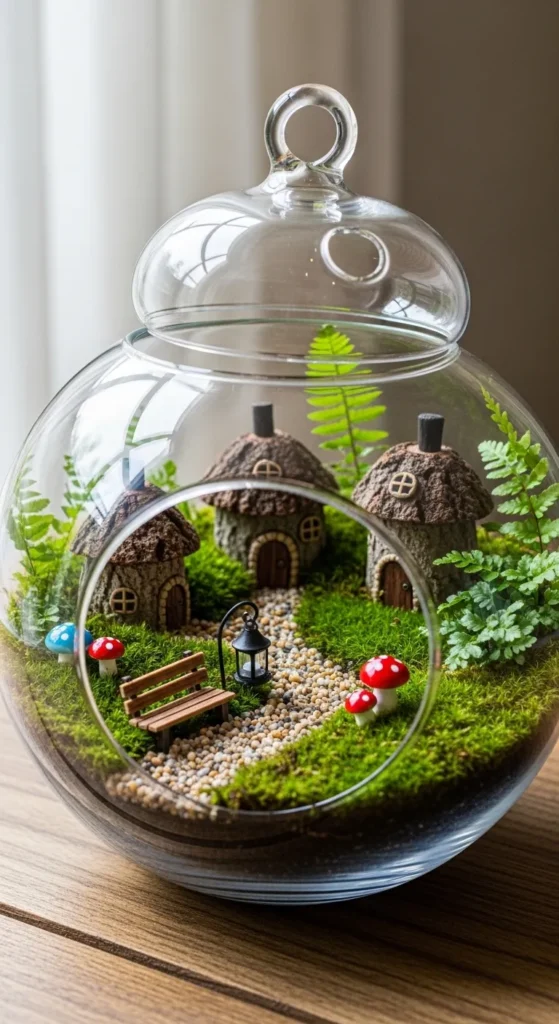
Terrarium fairy gardens provide a contained, magical environment. The glass protects plants while offering a clear view of the miniature scene, ideal for display indoors or on patios.
Functionally, the enclosed environment reduces maintenance, retains moisture, and allows creative layering. This design is perfect for DIY enthusiasts seeking a magical, portable miniature garden.
17. Fairy Garden with Tiny Bench
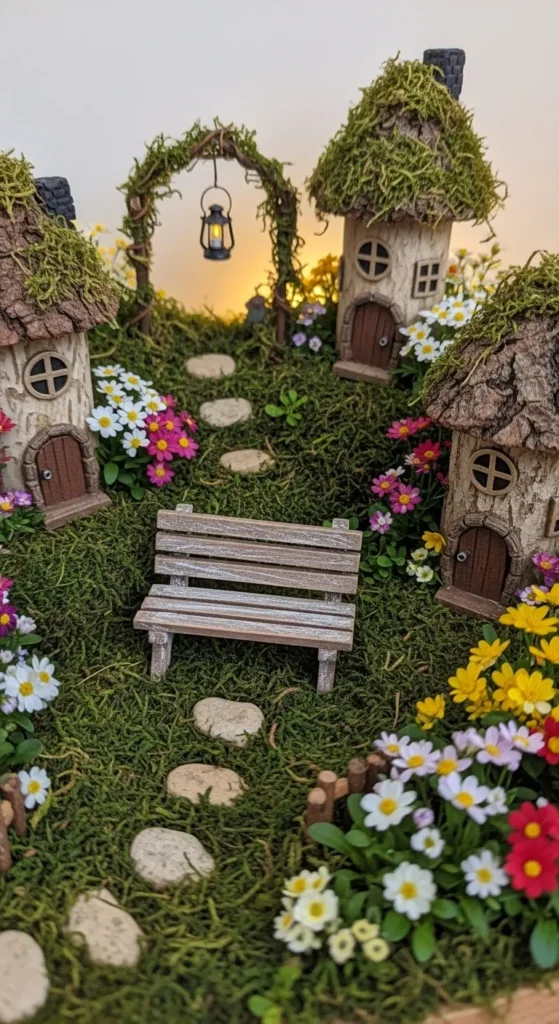
Tiny benches enhance scale and realism, offering visual breaks and story opportunities. They invite miniature figurines to “rest” and create interactive scenes.
Functionally, benches help organize space and provide balance in layout. They also serve as central elements that unify different sections of a fairy garden.
18. Seasonal Fairy Garden
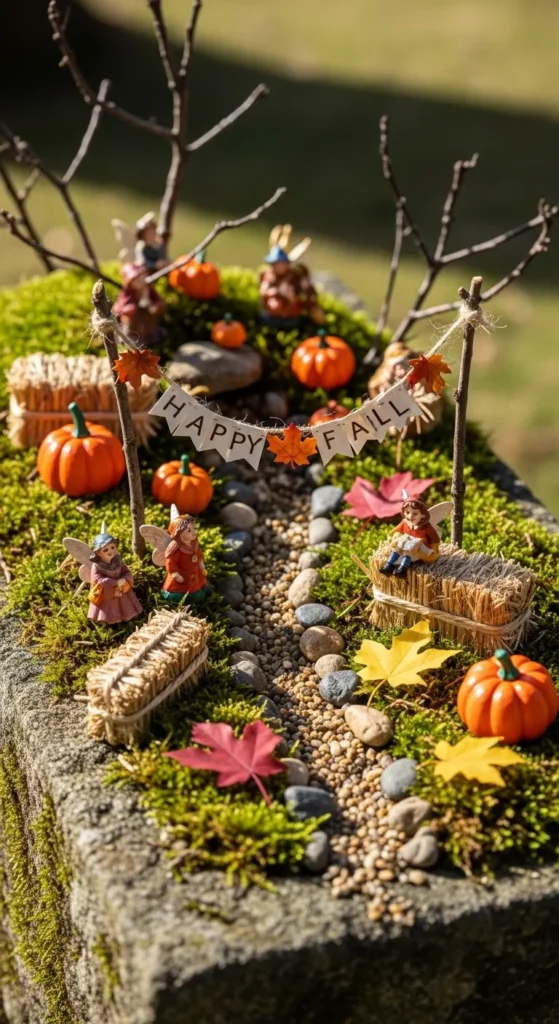
Seasonal fairy gardens allow continual refreshment and creativity. Changing décor reflects holidays, seasons, or events, maintaining interest and variety.
Functionally, modular and movable elements simplify updates. Plants and figurines can be swapped to accommodate seasonal themes, offering a versatile, year-round magical garden experience.
19. Fairy Garden with Lighting
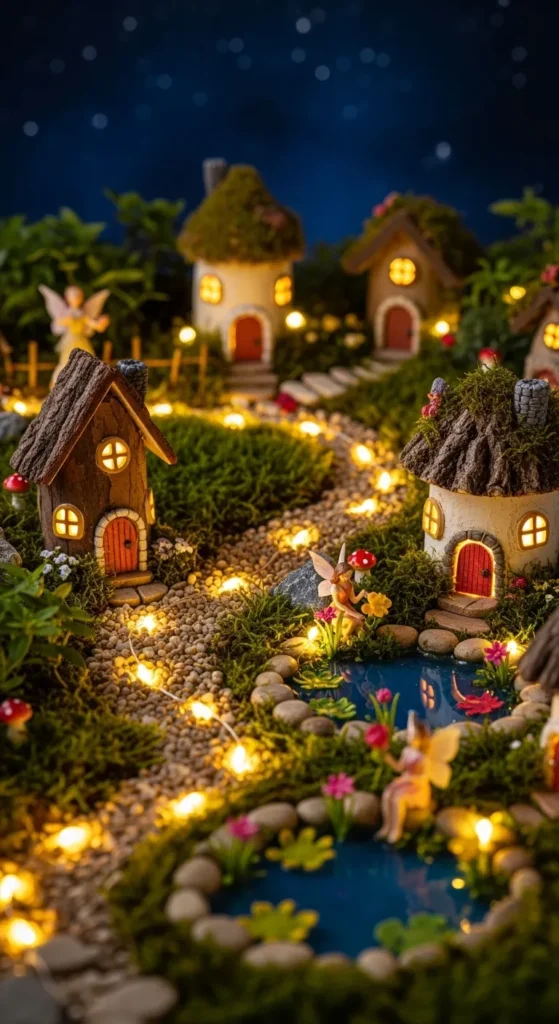
Lighting adds drama and enchantment, transforming the garden into a glowing miniature world after sunset. LED lights are safe, low-maintenance, and highlight key areas.
Functionally, lights guide pathways, create focal points, and extend playtime into evening hours. This DIY element enhances the immersive experience and visual charm of any fairy garden.
20. Fairy Garden in a Hollow Log
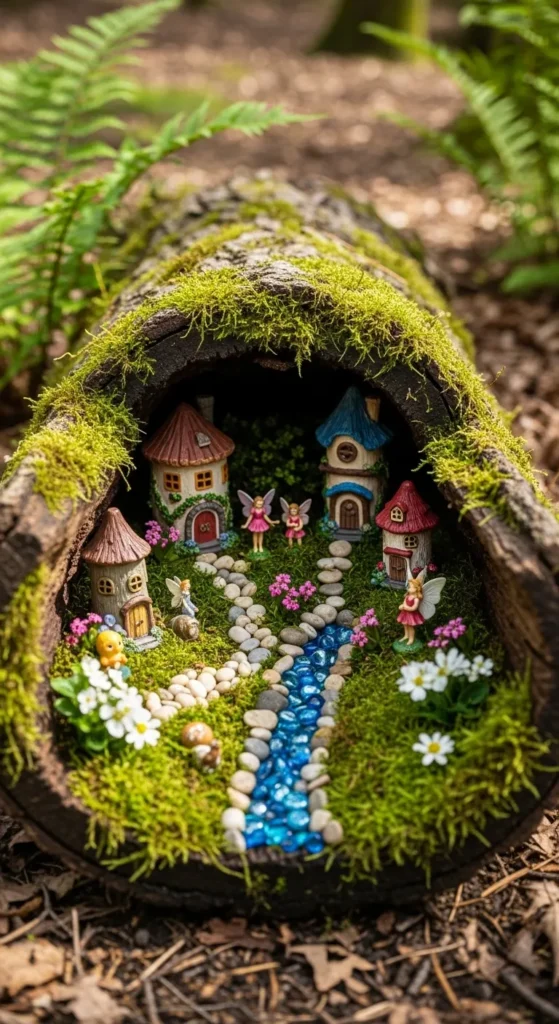
Hollow log gardens utilize natural elements to create depth and realism. The log acts as a contained structure, perfect for moss, plants, and figurines, creating a whimsical miniature environment.
Functionally, logs offer protection, stability, and moisture retention. They are ideal for shaded areas and provide a durable, low-maintenance foundation for magical DIY fairy gardens.
21. Circular Patio Fairy Garden
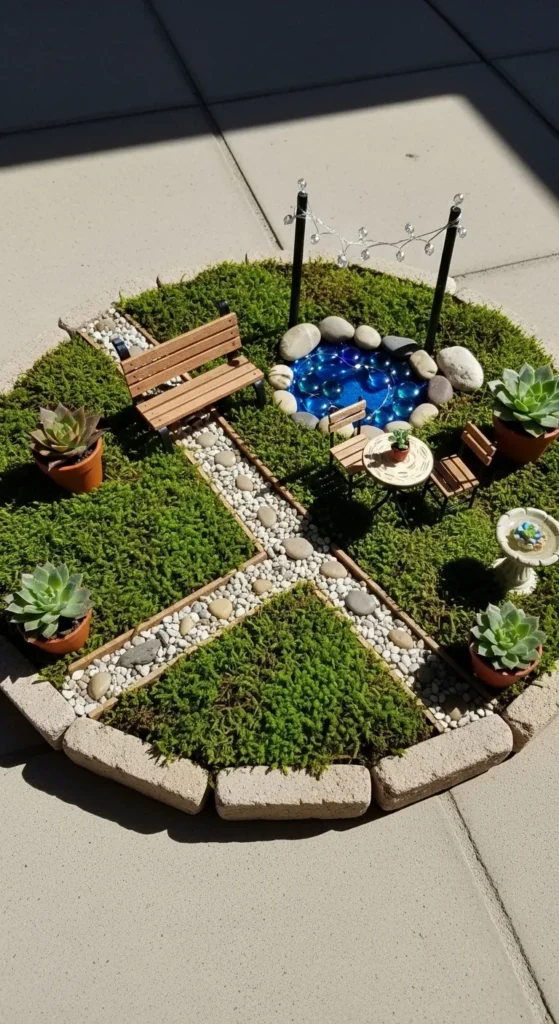
Circular patio fairy gardens are ideal for compact spaces. The round shape allows easy viewing from all sides and creates a defined miniature world for storytelling and imagination.
Functionally, containers or raised circular planters simplify care, soil management, and portability. This design brings enchantment to patios, decks, or small gardens, combining DIY creativity with practical display.
Conclusion
Fairy gardens offer a magical way to bring creativity and enchantment to any space. From woodland setups to terrarium designs, these 21 fairy garden ideas provide inspiration for miniature worlds that captivate both children and adults. By combining imagination, plants, and decorative elements, you can create interactive, visually stunning environments. Whether for a backyard corner, a window box, or a terrarium, these DIY projects encourage storytelling, hands-on creativity, and endless enjoyment in a miniature, magical landscape.