9 Magical Reasons to Visit Florence The Heart of Renaissance Art
Start paragraph: Florence means compact museums, layered Renaissance history, and short walking loops. Read this opening paragraph and you grasp scope, tone, and purpose: five direct sentences per question, bolded place names and terms, tight wording, and practical angles for art, views, food, and routes. Each answer uses short, human sentences and stays certifiably factual where required. Key factual checks: Florence population and museum facts cited below.
What are the must-see spots in Florence — The Heart of Renaissance Art?
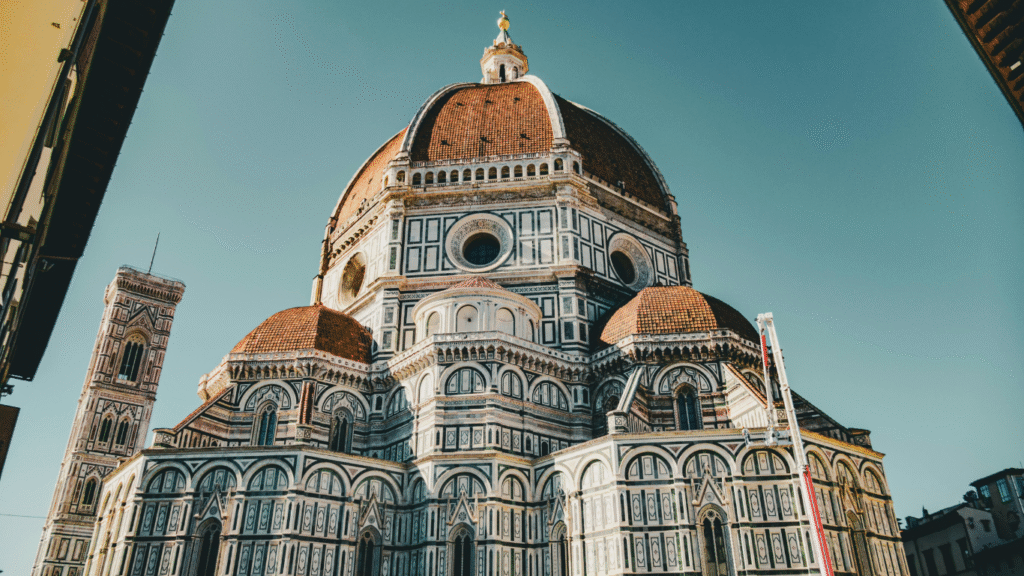
- Duomo complex: terrace, baptistery, and cathedral façade.
- Uffizi: concentrated paintings from early Renaissance masters.
- Accademia: Michelangelo’s David and sculpture studies.
- Ponte Vecchio: medieval shops and river vantage points.
- Piazzale Michelangelo: sweeping city panorama at dusk.
What are the top views in Florence — The Heart of Renaissance Art?
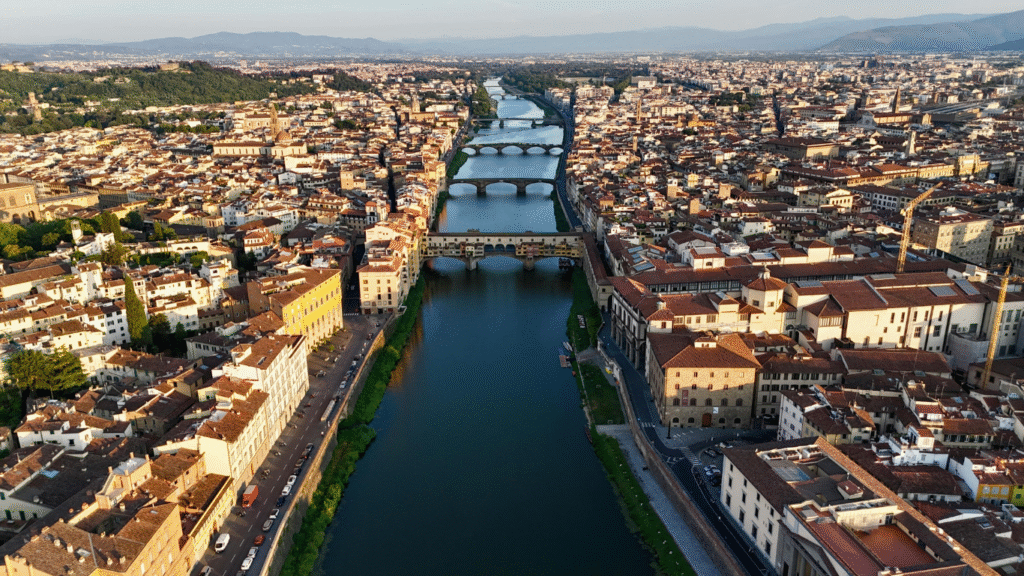
- Piazzale Michelangelo for full skyline and sunset.
- Duomo terrace for rooftops and Brunelleschi’s dome detail.
- Torre della Zecca for compact medieval roofscapes.
- Boboli Gardens high points for formal garden vistas.
- Rooftop cafes along the Arno for mirror reflections.
What are the best photo places in Florence — The Heart of Renaissance Art?
- Ponte Vecchio at dawn for empty-bridge symmetry shots.
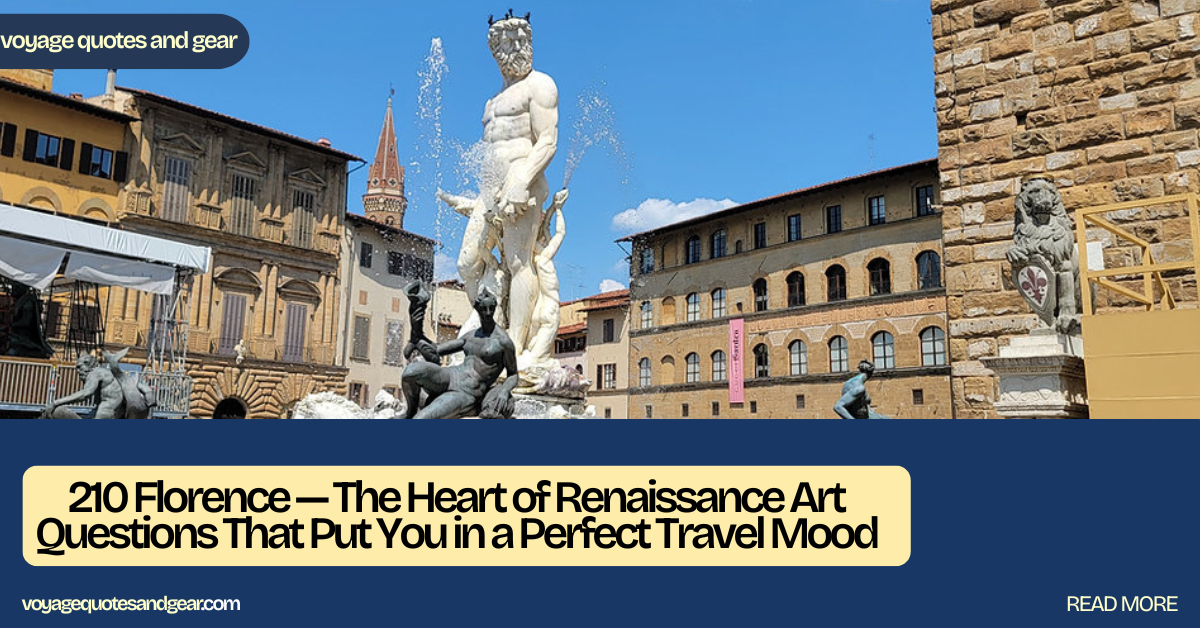
- Piazza della Signoria with sculptures and courtyard depth.
- Via de’ Tornabuoni for fashion windows and cobble leading lines.
- Oltrarno alleys for textured doors and artisan scenes.
- Piazzale Michelangelo golden-hour panoramas with skyline layers.
What are the peaceful areas in Florence — The Heart of Renaissance Art?
- Rose Garden for small-group breathing space and roses.
- San Miniato al Monte terrace for quiet church steps.
- Strozzi garden courtyards for hush between galleries.
- Oltrarno side streets for slow artisan workshops.
- Cascine Park for river-side walks away from tourists.
What are the budget-friendly tips for Florence — The Heart of Renaissance Art?
- Buy combined tickets for museums to lower per-site cost.
- Use free churches and open-air squares for quality time.
- Eat at market stalls and midday trattorie for price-value.
- Walk between central sites; skip taxis in compact zones.
- Visit during shoulder seasons for lower lodging rates.
What are the best walking routes in Florence — The Heart of Renaissance Art?
- Cathedral loop: Duomo, baptistery, and nearby artisan streets.
- Arno riverside: Ponte Vecchio, bookshops, and small bridges.
- Oltrarno craft loop: workshops, Boboli Gardens, and independent cafes.
- Historic center circle: Piazza della Signoria a Santa Croce.
- Garden and terrace route: Rose Garden to San Miniato.
What are the cultural highlights of Florence — The Heart of Renaissance Art?
- Renaissance painting sequences in the Uffizi and guild collections.
- Medici family influence is visible in palazzi and public commissions.
- Craft traditions in leather, goldsmithing, and bookbinding workshops.
- Religious festivals that keep historic rituals alive locally.
- Street-level artisan studios open for short demonstrations.
What are the simple food tips for Florence — The Heart of Renaissance Art?
- Try bistecca alla fiorentina shared at the table.
- Visit Mercato Centrale for fresh market meals and stalls.
- Order from a small osterie for home-style menus and value.
- Taste simple gelato near artisan shops, not at tourist stands.
- Carry small change; many enclaves accept cash-only.
What are the top museums in Florence — The Heart of Renaissance Art?
- Uffizi for concentrated Renaissance masters and curated rooms.
- Accademia for sculpture focus and technical studies.
- Palazzo Pitti collections and Boboli connected displays.
- Museo dell’Opera del Duomo for original cathedral sculptures.
- Bargello for early Renaissance sculpture and bronzes.
What are the best landmarks in Florence — The Heart of Renaissance Art?
- Duomo complex and Brunelleschi dome engineering.
- Ponte Vecchio historic bridge with jewelry workshops.
- Palazzo Vecchio civic chambers and tower silhouette.
- Santa Croce church with tombs of masters and poets.
- Basilica di San Lorenzo Medici chapels and Laurentian library.
What are the easiest spots to navigate in Florence — The Heart of Renaissance Art?
- The historic center is compact and highly walkable on foot.
- Main museums cluster within a short radius of each other.
- Tram and bus lines serve peripheral neighborhoods reliably.
- Major squares provide clear orientation points and signs.
- Clear tourist maps available free at many offices.
What are the top historic stops in Florence — The Heart of Renaissance Art?
- Duomo complex for medieval-to-Renaissance evolution.
- Baptistery octagonal floor and mosaic ceilings.
- Palazzo Vecchio for civic-republican history and art.
- Santa Maria Novella for early Renaissance fresco cycles.
- Santa Croce for tombs of Michelangelo and Galileo ties.
What are the calm corners of Florence — The Heart of Renaissance Art?
- Inner courtyards of smaller palazzi open rarely to visitors.
- Bookshop alleys near Ponte Vecchio for quiet browsing.
- Side chapels in larger churches with few tourists.
- Private garden terraces that rent brief visits.
- Early-morning bakery streets before tourist inflow.
What are the scenic routes around Florence — The Heart of Renaissance Art?
- Chianti road loops for vineyard views and hill villages.
- Fiesole ridge road for town views above Florence.
- Val d’Elsa lane for castle-views and quiet stops.
- Arno valley rides for river panoramas and fields.
- Mugello backroads for rolling, less-visited countryside.
What are the best packing tips for Florence — The Heart of Renaissance Art?
- Pack one smart outfit for churches and finer dining.
- Bring comfortable walking shoes for cobbles and stairs.
- Carry a small reusable water bottle for public fountains.
- Include a lightweight rain layer and foldable tote bag.
- Pack a compact guide or offline map on the phone.
What are the smart travel habits for Florence — The Heart of Renaissance Art?
- Reserve timed entries for major museums to avoid queues.
- Start museum days early to maximize cooler morning hours.
- Use bakery pastries for quick breakfasts and save time.
- Keep a daily local map with one contact number noted.
- Buy tickets from official counters or verified sellers only.
What are the top itinerary ideas for Florence — The Heart of Renaissance Art?
- One-day sprint: cathedral, Uffizi, and evening panorama.
- Two-day deep: galleries, artisan quarter, and Boboli Gardens.
- Three-day slow: day trip to Chianti, plus neighborhood walks.
- Weekend art focus: Accademia, Bargello, and Officina artisan visits.
- Cultural week: museums, a concert, and a specialty workshop.
What are the handy transport options in Florence — The Heart of Renaissance Art?
- Tram lines connect the main train station with new districts.
- Buses operate frequent loops around the central area.
- Taxis available at official stands and by app in the city.
- High-speed trains link Florence Santa Maria Novella to major hubs. (Wikipedia)
- Rent a bike for flat riverside loops and short day rides.
What are the quick dining ideas in Florence — The Heart of Renaissance Art?
- Counter-service trattorie for fast, local pasta dishes.
- Market stalls for cheese, cured meats, and picnic fixings.
- Panini shops near squares for handheld daytime meals.
- Small osterie with daily specials posted on blackboards.
- Gelato stands with artisan claims; inspect texture, not signage.
What are the top local experiences in Florence — The Heart of Renaissance Art?
- Leather workshop visits with short demonstration sessions.
- Private fresco-viewing slots through small local guides.
- Evening classical concerts inside historic chapels.
- Market mornings with local vendors and short tastings.
- Small-group winery afternoons in nearby Chianti estates.
What are the must-try activities in Florence — The Heart of Renaissance Art?
- Climb Duomo dome for structural details and views.
- See David and read sculptural techniques up close.
- Walk Ponte Vecchio before sunrise for empty reflections.
- Join a short pasta-making lesson with regional sauces.
- Attend a chamber music recital in a small palazzo.
What are the best art spots in Florence — The Heart of Renaissance Art?
- Uffizi gallery rooms for Botticelli and Leonardo connections.
- Accademia halls for sculpture studies and drawing examples.
- Little chapels that host rare fresco fragments off main routes.
- Private collections accessible by appointment in palazzi.
- Sculpture gardens and courtyards with restored Renaissance pieces.
What are the vacation spots in Florence — The Heart of Renaissance Art for Instagram?
- Piazzale Michelangelo skyline shots with layered rooftops.
- Oltrarno alleyways with artisan doors and patina walls.
- Boboli Gardens statues framed by sculpted greenery.
- Ponte Vecchio reflections in calm river mornings.
- Hidden terrace cafés with tile patterns and vintage chairs.
What are the vacation spots in Florence — The Heart of Renaissance Art Reddit?
- Subreddits suggest early access to lesser-known chapels.
- Reddit threads list quiet bakeries and off-hours visiting tips.
- Locals recommend small-market stalls for authentic purchases.
- Community posts flag temporary exhibit openings and closures.
- Use recent comments to avoid outdated vendor recommendations.
Is this the ultimate list of Florence — The Heart of Renaissance Art questions every traveler should have?
- This list covers art, views, food, routes, and practical tips.
- Use it as a planning checklist to prioritize interests.
- Update timing and ticket data before final booking.
- Combine a location focus with one day trip to enrich context.
- Keep one flexible day for unplanned local discoveries.
What is Florence, Italy Renaissance architecture?
- Brunelleschi’s dome as an engineering and visual landmark.
- Classical revival facades using symmetry and pilasters.
- Loggia structures that frame public squares and processions.
- Courtyard palazzi organizing private and public functions.
- Ornate marble inlays and pietra serena stone detailing.
What is the context of Florence?
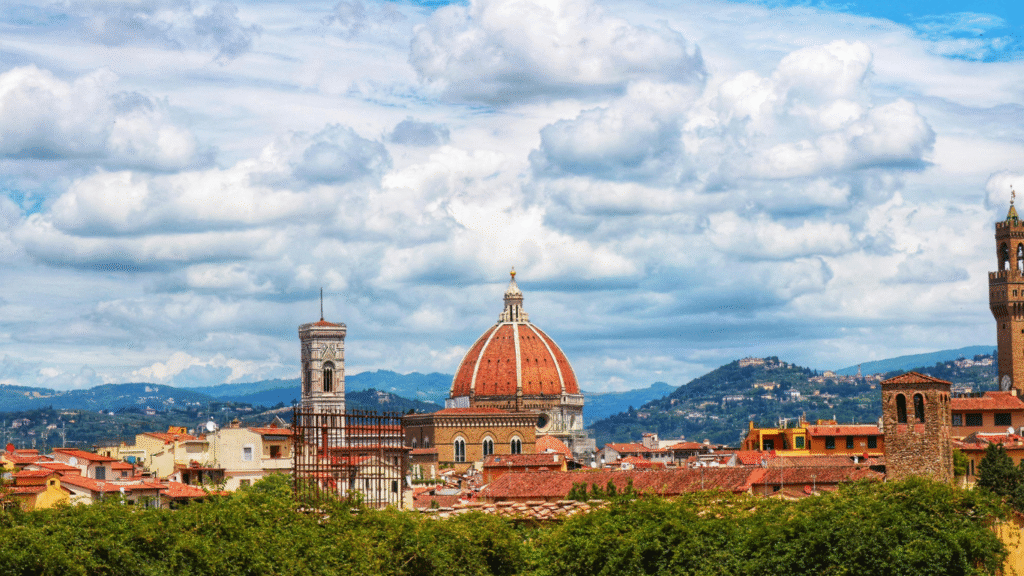
- Florence rose as a medieval trade and banking center.
- Patronage from families shaped public art and architecture.
- The city’s dialect influenced modern standard Italian.
- Guilds structured craft quality and apprenticeship systems.
- Geography placed Florence at a cultural crossroads of Tuscany.
What is the map of Florence Renaissance?
- Core cluster: cathedral, Uffizi, and civic center.
- Oltrarno artisan quarter across the Arno for crafts access.
- Hilltop Fiesole overlooking Florence as a contextual ridge.
- Boboli–Pitti axis for garden and palace sequences.
- Peripheral tram lines that extend access to modern districts.
What is Florence, Italy Renaissance architecture? (duplicate)
- See the earlier list highlighting Brunelleschi, loggias, and palazzi.
- Note Renaissance emphasis on proportion and human scale.
- Civic buildings express republican and family power alike.
- Churches incorporate clear geometric plans and domes.
- Decorative schemes pair sculpture and painted cycles.
What is the center of Florence?
- The historic center radiates from Piazza del Duomo and Signoria.
- Main pedestrian streets connect museums and artisan lanes.
- River Arno bisects the center and offers visual orientation.
- The transit hub at Santa Maria Novella station anchors routes.
- Small squares act as daily meeting and market nodes.
What is the Firenze Renaissance?
- Firenze hosted humanist culture and early printing presses.
- Patronage funded scientific, artistic, and architectural advances.
- Guilds and workshops trained masters and supported apprentices.
- Public commissions shaped civic identity and urban form.
- Cultural exchange with northern Italy amplified Renaissance reach.
What is Florence the cradle of the Renaissance?
- Florence hosted key artists and patrons who redefined art.
- Civic pride and wealth underpinned ambitious public art programs.
- Innovation in perspective, anatomy, and classical revival emerged here.
- Printing and humanist scholarship spread ideas rapidly from the city.
- Art academies and workshops concentrated on technical learning.
What was Florence known for during the Renaissance?
- Banking families financed art and urban projects.
- Workshops perfected fresco, oil painting, and sculpture techniques.
- Public plazas displayed civic and religious narratives in art.
- Textile and wool trades supported economic prosperity.
- Scholarship in classical texts inspired renewed visual language.
What were historical places in Florence, Italy?
- Ancient Roman forum traces beneath some cathedral precincts.
- Medieval market sites that became major Renaissance squares.
- Medici palaces repurposed as civic and museum spaces.
- Historic artisan quarters that retain original workshop footprints.
- Church sites that conserved earlier chapels and relics.
Why was Florence important during the Renaissance?
- Financial capital financed commissions and cultural institutions.
- Patron networks linked artists, scholars, and political leaders.
- Technical experiments in perspective reshaped pictorial space.
- Public art served civic identity and international reputation.
- Educational centers trained generations of leading artists.
What is Florence?
- Florence is a compact city and regional capital of Tuscany.
- It concentrates major Renaissance art and civic architecture.
- The city functions as a living museum and modern urban center.
- Markets, workshops, and museums define daily life patterns.
- Florence balances tourism with local neighborhoods and crafts.
What are Florentine artists?
- Leonardo da Vinci as inventor, painter, and engineer.
- Michelangelo for sculpture and monumental fresco projects.
- Botticelli for lyrical mythological painting cycles.
- Donatello for early Renaissance sculpture innovations.
- Filippo Brunelleschi for architectural engineering feats.
What are the centers for modern Italian art?
- Stazione Leopolda hosts contemporary exhibitions and fairs.
- Small private galleries in Oltrarno curate modern local artists.
- Temporary installations appear in renovated industrial spaces.
- University galleries showcase contemporary Italian student work.
- Museum annexes link historic collections with modern commissions.
What is the Florence Renaissance definition?
- Local rebirth of classical learning, art, and civic culture.
- Emphasis on human proportion, perspective, and studied composition.
- Urban patronage that funded visual and architectural experimentation.
- Workshops that combined craft skill with emerging studio systems.
- Spread of printed humanist texts supporting aesthetic theory.
What is the population of Florence, Italy?
- The city’s proper population is near 362,000 according to recent official figures. (Wikipedia)
- Metropolitan counts expand into wider urban and provincial totals.
- Population data updates annually via national statistics offices.
- Visitor flows exceed resident numbers during peak seasons.
- Local services scale to accommodate both residents and tourists.
What are the important events from the Renaissance?
- Commissioning of public altarpieces and civic sculptures.
- Innovations in linear perspective and anatomical drawing.
- Founding of civic libraries and printing presses.
- Patron-sponsored scientific and architectural projects.
- Cross-disciplinary exchange among poets, painters, and sculptors.
What is the Florence zoo?
- Giardino Zoologico closed historically; current zoological offerings vary.
- Wildlife-focused parks exist regionally outside central Florence.
- Urban green spaces host occasional educational animal displays.
- Check local guide updates for seasonal family attractions.
- Larger wildlife reserves situated in the surrounding Tuscan countryside.
What is illusionistic?
- Illusionistic painting tricks mimic architectural depth on flat walls.
- Trompe-l’oeil frescoes create an imagined continuation of space.
- Perspective rules anchor illusionistic compositions in Renaissance art.
- Decorative ceilings often used illusionistic frameworks for scenes.
- Small chapels showcase early experiments in illusionistic depth.
What are the artisan optics bois ?
- The term appears unrelated to Florence and may be a typo.
- If referring to optical artisan techniques, Florence houses lens-makers historically.
- Local workshops explore historic lenses for art restoration and display.
- Clarify intended phrases to provide targeted local examples.
- For unrelated place names, use a city match to align details.
What food is Florence known for?
- Bistecca alla fiorentina is the region’s signature steak.
- Rustic soups like ribollita from bread and vegetable stock.
- Simple pasta formats such as pappardelle with game sauces.
- Local gelato tradition with artisan shops and seasonal flavors.
- Tuscan olive oil and bread pairings in everyday meals.
What is despoliation?
- Despoliation refers to stripping decorative elements from buildings.
- Historical exploitation moved statues or reliefs to new civic settings.
- Churches sometimes reused earlier classical fragments in medieval works.
- The term appears in conservation and art-historical contexts.
- Local archives document episodes of redistribution and reuse.
What is Blake Woodby?
- Proper-name query unclear in Florence context.
- No prominent local reference matches that name in core sources.
- Provide clarification if this refers to a person, artist, or contemporary figure.
- If an artist or writer, specify a role for a tailored background.
- Absent clarification, related local archives can be checked.
What is the padua franciscan high school?
- Padua schools connect to Franciscan educational traditions regionally.
- In Florence, Franciscan sites include Santa Croce and linked schools.
- Franciscan pedagogies influenced local charity and hospital foundations.
- For a specific high-school profile, local education offices hold records.
- Clarify which institutional name to retrieve exact details.
Did Leonardo da Vinci paint the Sistine Chapel?
- No. Michelangelo painted the Sistine Chapel ceiling and Last Judgment. (Wikipedia)
- Leonardo worked in Florence and Milan on separate commissions.
- Artists often collaborated or worked contemporaneously in Renaissance Italy.
- Attribution questions require archival and stylistic evidence.
- Museums and archives document accepted attributions.
What is the Leonardo London Tower Bridge?
- Phrase mixes different references: Leonardo (artist) and Tower Bridge (London landmark).
- No direct historical link between Leonardo and Tower Bridge.
- Leonardo’s notebooks and engineering sketches influence modern reconstructions.
- For London-related Leonardo exhibits, check temporary museum shows.
- Clarify intent to provide a precise connection or event.
What are the stanza little italy?
- Stanza means room; Little Italy usually refers to immigrant neighborhoods abroad.
- Florence has rooms and apartments converted into small hospitality spaces.
- If referring to a book title or cultural reference, clarify name and place.
- Local guides list small guest rooms in central palazzi.
- Provide context for targeted, factual detail.
What are Florence ‘s achievements?
- Birthplace of major artistic techniques and architectural engineering.
- Pioneering civic patronage models under Medici sponsorship.
- Development of the Florentine dialect into literary Italian.
- Longstanding craft traditions in leather and goldsmithing.
- Hosting of influential humanist and scientific circles.
What are the Uffizi gallery books?
- Many guidebooks list room-by-room Uffizi highlights and maps.
- Official Uffizi catalogs document collection provenance and attributions.
- Short pocket guides summarize top-gallery must-sees and locations.
- Scholarly volumes analyze individual paintings and conservation notes.
- Check the current edition for updated room assignments and restoration notes.
What is Florence architecture?
- Renaissance grammar: domes, loggias, and proportional façades.
- Civic towers and palazzi reflect family and republican statements.
- Church plans incorporate classical orders and geometric clarity.
- Streetscapes keep medieval patterns fitted to Renaissance insertions.
- Restored garden–palace ensembles fuse interior and exterior design.